
Background to issue:
Content on this page deals with sensitive and potentially traumatic material, which may be distressing for viewers. If you or others you know feel you need assistance or help, the following services are available:
- Lifeline on 13 11 14
- Aboriginal & Torres Strait Islander crisis support line 13YARN on 13 92 76
- Beyond Blue on 1300 224 636
- Headspace on 1800 650 890
- ReachOut at au.reachout.com
The R.A. Rodda Museum of Pathology stolen body parts matter, also referred to as the ‘Coronial Project’ stems from historic practices which, according to a Coroner’s investigation in 2025, occurred between 1996 and 1991 in Hobart, where body parts were stolen without consent from coronial autopsies.
The R.A. Rodda Museum is part of the University of Tasmania’s Faculty of Health, with the apparent reason behind the stealing of body parts from coronial autopsies was for teaching and research purposes by forensic pathologists. This intent does not justify the breach of medical ethics evnident in the failure to comply with fundamental requirements such as seeking and obtaining informed consent.
The exact nature and magnitude of this issue only came to light slowly, due to partial and staggered release of details into the public domain over the course of years.
On 3 April 2024 the Tasmanian Coronial Division released a brief statement announcing that in February 2016, the Coronial Division had been advised by the R.A. Rodda Museum of Pathology that it had identified it may hold human remains which appear to have been sourced from coronial autopsies but without consent of either the families or the coroner at the time.
The Coroner’s Office also advised a formal investigation had commenced into this situation.
It later transpired that despite the 2016 Rodda Museum notification originally indicating there were three identified bone samples, between then and the public statement of April 2024, the Coroner’s Office had identified human remains of 147 people which had been kept unlawfully from autopsies undertaken between 1953 and 1985.
The next the community heard of the matter was when a list of names of 126 people were published n full page adverts in the state’s newspapers on 25 January 2025. The advert called for anyone related to those named to contact the Coroners Court to assist with the named Coronial Project investigation.
For parents, children, siblings and other family members this was a brutally shocking and traumatising way to discover that their loved one – who, in many cases they thought had been farewelled decades ago in some cases – had had part of their body removed, stolen and keep without consent.
Unfortunately, the protracted and oblique coronial project investigation exacerbated people’s distress and anger over both the treatment of their deceased loved one, and also of themselves as they sought answers.
By the time the Coroner’s Report and Findings were released in September 2025 the final identified number of human remains kept unlawfully without consent following coronial autopsies were 177, with the practice actually occurring for the period from1966 to 1991.
Affected family members’ frustrations were further exacerbated when experiencing obstacles to their request to reclaim their loved one’s body parts for burial.
During this period calls for formal state recognition of the wrongs done and inflicted were growing.
Meg Webb MLC first called for a formal apology following the confronting advertisement listing the 126 names published on 25 January 2025, and kept pursuing that call throughout 2025, leading up to and following the Coroner’s Report and Findings.
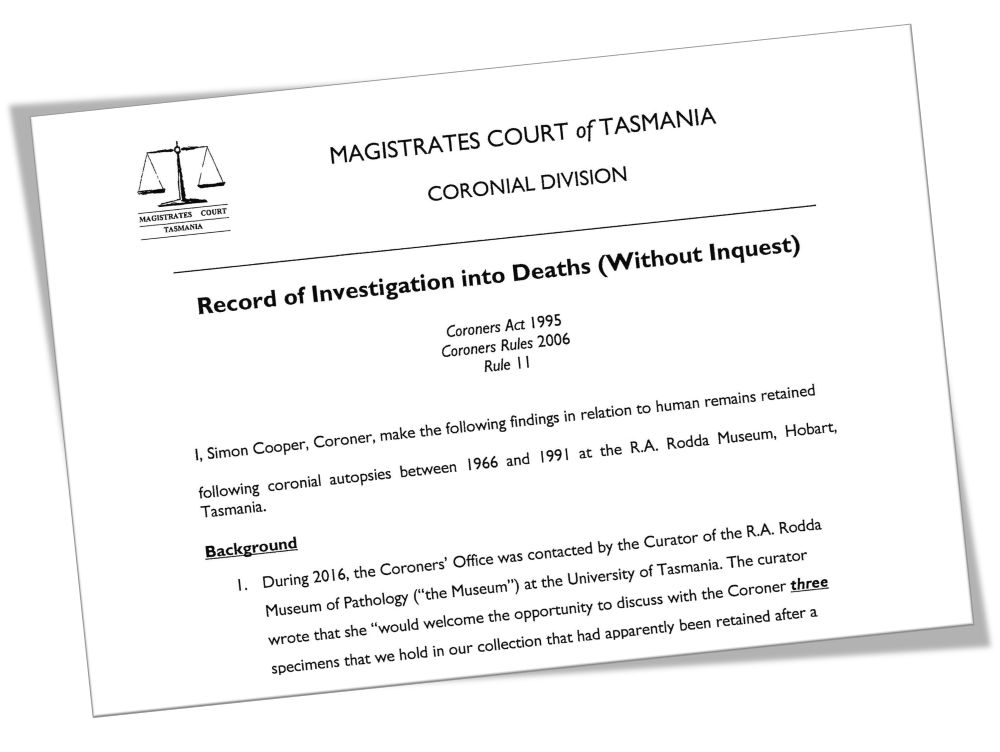
On the 11th September 2025 Coroner Simon Cooper released his final report and formal findings of his Coronial Project investigation into human remains retained without consent following autopsies by the R.A. Rodda Museum.
View or download the Coronial Project Final Report as a pdf here.
My Position: Historic Actions - but Current and Ongoing Hurt and Trauma
The historic and unlawful actions which saw samples of human remains stolen and kept from coronial autopsiesis a devastating breach of trust, and a failure of governance and oversight by public institutions.
These revelations have rocked many people’s confidence in our civic institutions whom we all rely on.
I have consistently been on the recrd calling for a formal state apology for the failings of our publicinstitutions during the time these unlawful practices were occuring. While the wrong-doing may be historic, the pain and trauma, exacrbated by the 2025 coronial investigation processes remains current and ongoing.
However, I have also been adamant that such a state apology is not the end of the matter.
The state apology needed to also acknowledge the retraumatising impact inflicted upon families by the 2025 publication of names and the subsequent Coronial Project investigation – which unfortunately caused additional harm to already devastated and grieiving people. Particullry thse who were enied the opportunity to reclaim and repatriate the stolen body part of their loved one.
Additional to an Apology, it is my position that the state government should also consider establishing a form of redress or compensation scheme for current affected family members.
I formally put this call for consideration of a redress scheme on the public record during my Budget-in-Reply speech of 27 May 2026:
“I reiterate my calls for a redress scheme for those family members affected by the wrong practices at the R.A. Rodda Museum, which saw body parts stolen from coronial autopsies and kept without consent. [This is a matter] of justice for Tasmanians harmed
by actions of the state, and I call on the government to act on those calls with alacrity.”
My Consideration of this Issue
Following the April 2024 statement by the Coroner’s Office informing the community of the 2016 notificaiton received from the R.A. Rodda Museum regarding identified humam remains obtained from coronial autopsies over which there were serious questions, I was shocked and called for transprent investigation, to ensure that necessary lessons were learned, but further public updates were not provided.
It was not until my office phone began ringing following the newspaper publication of the 126 names of people identified as having had some form of body part removed and kept without consent or authorisation during an autopsy – stolen -that the matter was drawn once more to my attention.
It became very clear that there were two related key areas of concern, and institutaional failure:
- the harm caused by the revelations of the historic unlawful actions undertaken; and
- the additional harm caused by the failings of current public institutions and processes, when responding to the matters arising.
The impact of this sudden list of names upon family members was brutal and devastating.
Some discovered their deceased loved one on the list themselves, others were informed by other family members or friends, while some only found out months later.
There should have been more effort made to identify and contact people privately – and many people have voiced disappointment over that perceived lack of effort to do so. I heard of instances where family memebrs sharing the same surname as that of the deceased person listed in the newspaper advert, still lived in the same residence, or locally.
Many felt they were being forced to grieve the loss of their loved one a second time, the loss of their infant child, their brothers, sisters, parents, and partners.
Unfortunately, many people found interacting with the Coronial Project processes extremely distressing, difficult, confusing and re-traumatising.
There appeared to be a lack of awareness of the extent, despite best efforts, the standard bureaucratic processes were not delivering a trauma informed or responsive approach.
The Coronial Project investigation process itself was perceived as protracted and confusing, with people strugging to obtain information and updates, or suddensly discovering they were expected to make decisions within limited timeframes, particulalry in regard to recaliming their loved ones remains at the conclusion of the coronial investigation.
The public release in September 2025 of the Coroner’s Findings left many unanswered questions for many people, such as: how did this happen; who was responsible, why did it happen to their loved one, and why is nobody being held accountable? Amongst other concerns…
It was by listening to, and liaising with those affected family memebers, as well as trying to obtain information on their behalf from authorities and the State government, that provided insight and understanding of how this serious failing of state institutions – both then and now – continues to impact those affected family members.
Parliamentary Action
View the Parliamentary Apology delivered in the House of Assembly, on 19 May 2026
View Meg Webb MLC’s Speech in the Legislative Council, delivered on 19 May 2026
Hansard Transcript of the Parliamentary Apology
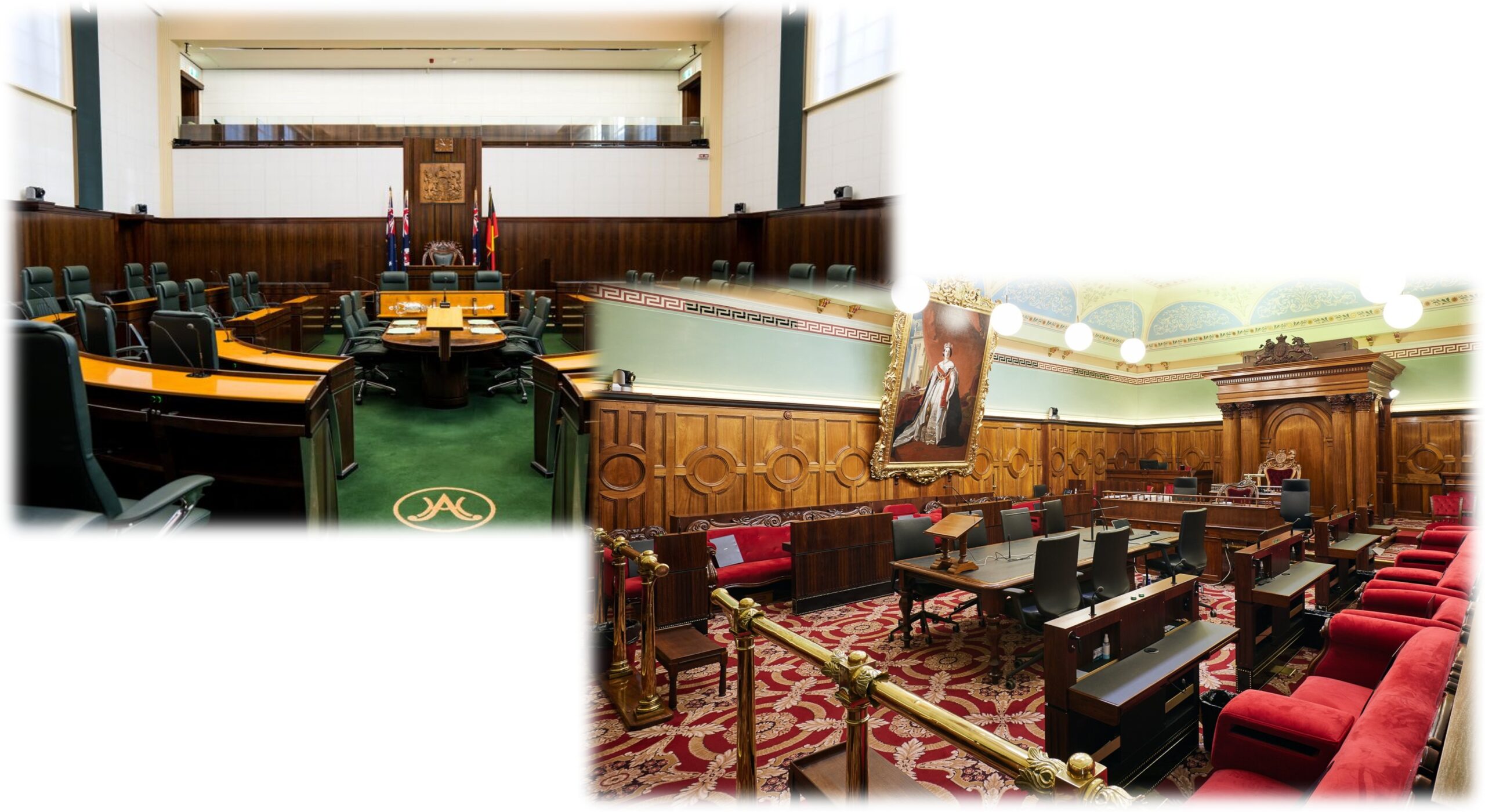
You can view and download the combined Hansard for both the Assembly and the Legislative Council Parliamentary Apology contributions delivered on Tuesday the 19th of May 2026 as a pdf documents below:
Media Release: Government Must Provide Public Apology to Families Impacted by Coronial Project Inquiry Advert List
Government Must Provide Public Apology to Families Impacted by Coronial Project Inquiry Advert ListIndependent Member for Nelson Meg Webb today called on the State Government to issue a formal public apology to those Tasmanians who discovered via a newspaper advert...

Talking Point-Coronial Project: Families hurt and shocked by this lapse
Talking Point | The Mercury | 6 February 2025; pg 21Families hurt and shocked by this lapseImagine finding out in a newspaper ad about a loved one's remains, writes Meg WebbI wish I didn’t need to write this. But in the past week I’ve been contacted by too many...
ABC Digital News-Coroner’s Office criticised for ‘blunt’ handling of informing families that specimens may have been collected from loved ones
Adam Holmes | ABC NEWS - Digital Online | 31 January 2025 Coroner's Office criticised for 'blunt' handling of informing families that specimens may have been collected from loved onesIn short: Tasmania's Coroner's Office is investigating whether specimens collected...
Article-‘No Consent’ for Museum to keep Autopsy Samples
The Australian | 4 April 2024; pg 3.'No Consent' for Museum to keep Autopsy SamplesMatthew DenholmA museum appears to have kept samples from 147 coronial autopsies for research for three decades, potentially without consent, prompting an investigation and demands for...
